Budgeting for Teens: Where Does Your Money Really Go?

- 🍔 Small everyday purchases like snacks or in-game items can have the biggest impact on your budget over time.
- 🎮 Understanding why you spend—whether for fun, trends, or convenience—is the first step toward smarter money habits.
- 💰 Budgeting isn't about stopping spending; it's about making sure your money goes toward what matters most to you.
“I’m gonna be real most of my money goes to food lol”
That was one of the first responses we received when we asked teens a simple question:
Where does your money go?
And honestly, it set the tone for the entire challenge.
Some teens admitted they spend most of their money on snacks. Others said Robux. Some talked about clothes, gifts, hobbies, or random impulse purchases they immediately regretted.
A few proudly said they save everything.
What stood out wasn’t where the money went.
It was how aware many teens already were of their spending habits.
They knew what they were buying.
They knew why they were buying it.
And in many cases, they already knew which habits they wanted to change.
About this article: The ideas discussed in this article reflect comments submitted by participants in a Modak community challenge and are intended for educational and informational purposes only. Responses are shared in participants’ own words and are published with their permission.
The Snack Budget Nobody Talks About
If there was one clear winner in the challenge, it was food.
Not gaming.
Not clothes.
Not technology.
Food.
One participant summed it up perfectly:
“I’m gonna be real most of my money goes to food lol”
Another gave an explanation that was somehow even more relatable:
“DoorDash because I’m lazy and like food”
It’s funny because it’s honest.
Many spending decisions aren’t driven by necessity. They’re driven by convenience, cravings, boredom, or simply wanting a little reward after a long day.
One of the most specific responses in the entire challenge came from a teen who said:
“Definitely clothes and the runner up is fudge stripe cookie and canned whip cream cause I get them every Wednesday lol”
At first glance, a weekly snack tradition doesn’t sound expensive.
But that’s how spending habits usually work.
Most people don’t lose track of their money through one giant purchase.
They lose track through small purchases that become routines.
A few dollars here.
A few dollars there.
Then suddenly it’s a habit.
And habits add up. The FDIC’s Money Smart curriculum for young people is built around exactly this idea: a budget isn’t about one big decision, it’s about noticing where small, everyday choices are actually going.

Robux, Gaming, and Digital Spending
Gaming was one of the largest spending categories in the challenge.
But most responses weren’t about buying games themselves.
They were about buying things inside games.
One participant explained:
“I usually spend a lot of my money on Robux on Roblox — I usually buy a lot of outfits and mansions in my games”
For many teens, digital purchases aren’t just purchases.
They’re part of how they express themselves online.
An outfit in Roblox might not exist in the physical world, but it still feels meaningful to the person buying it.
Another participant shared:
“I would say video games but I’m going to stop spending it all on that.”
That sentence is interesting because it captures something that appeared throughout the challenge:
Self-awareness.
Many teens weren’t just describing their spending habits.
They were actively reflecting on them.
They knew where their money was going.
And they were already thinking about whether that’s where they wanted it to go.
Fashion, Trends, and Spending for Identity
Clothing was another major category.
But the responses weren’t really about clothes.
They were about identity.
One participant wrote:
“I spend most of my money on clothing because I love having a big wardrobe for lots of different styles.”
That’s more than a shopping habit.
It’s self-expression.
Another teen shared:
“I’ve spent most of my money on stuff that is really popular right now and buying Robux! But I’m going to make better money choices!”
That answer captures something many people experience, regardless of age.
Trends create urgency.
Social media makes everything feel like a limited-time opportunity.
The fear of missing out can make spending feel easy.
Recognizing that influence is often the first step toward making more intentional decisions—which is precisely what the Consumer Financial Protection Bureau’s guidance for teens and young adults identifies as a key money milestone at this age.
How Modak helps
- 📊 Modak helps teens track spending and savings, making it easier to see where their money goes.
- 🎯 Kids can set savings goals and build healthy financial habits through real-world money management.
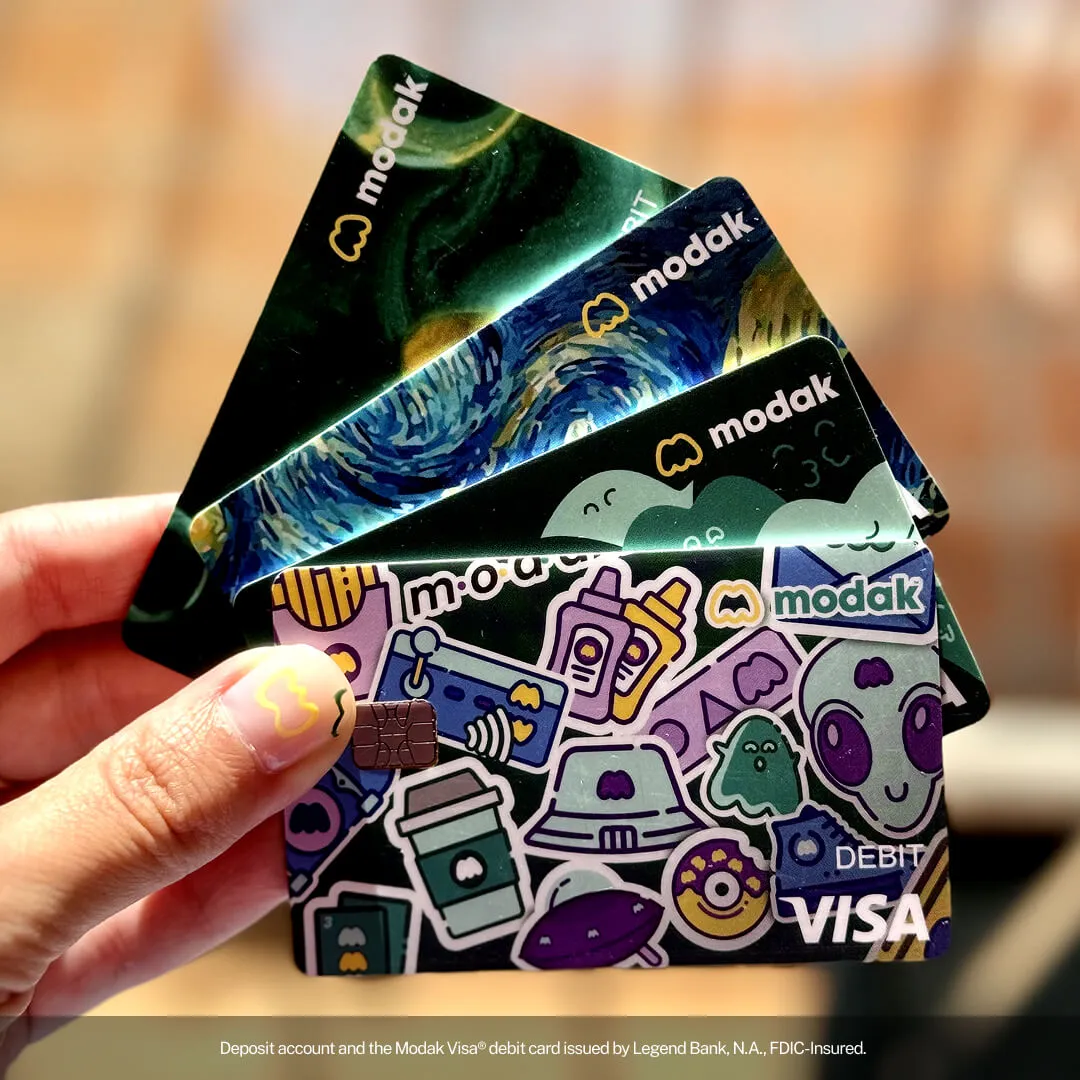
- 💳 With a Modak Visa® debit card and financial learning tools, teens can practice budgeting while staying in control of their spending.
The Surprising Group of Teen Savers
Not every response involved spending.
A smaller—but very interesting—group talked about saving.
One participant shared:
“I save my money up to invest and get more while I don’t have to pay. Then when I am required to pay for stuff, I will be rich.”
It’s ambitious.
It’s optimistic.
And honestly, it’s hard not to appreciate the confidence.
Note: While investing can help people work toward long-term financial goals, investment outcomes are never guaranteed and involve risk. The SEC’s Investor.gov has resources specifically written for teens who are curious about investing.
Another participant kept things simple:
“My money always goes to my savings to increase them over time.”
These responses were a reminder that not every teen sees money as something to spend immediately.
Some are already thinking about future goals.
Some enjoy watching their savings grow.
And some are surprisingly patient when something important matters to them.
Spending Money on Friends, Family, and Gifts
One of the most heartwarming patterns in the challenge had nothing to do with buying things for themselves.
Many teens talked about spending money on people they care about.
One participant shared:
“I mostly spend my money on snacks but right now I am saving up to buy my two favorite teachers something for teacher appreciation week.”
Another wrote:
“Stuff for my brother. I love my brother! Especially since it’s his birthday in 6 days!!”
These responses highlight something that often gets overlooked in conversations about money.
Spending isn’t always selfish.
Sometimes money becomes a way to show appreciation, celebrate relationships, or make someone else’s day better.
And those purchases often feel very different from impulse buys.
The Impulse Spending Trap
Some of the most insightful responses came from teens who openly admitted they struggle with impulse spending.
One participant wrote:
“Unfortunately.. random things that I believe and find cool.”
That single word—“Unfortunately”—says a lot.
Another participant shared:
“I spend most of my money on TikTok or AliExpress.”
And one of the most relatable responses in the entire challenge was:
“I always think I’m just buying one thing, but it never stays that way. One hoodie turns into a few items, and I justify it by saying I need it or it’ll make me happy…”
If you’re reading that and thinking, “I’ve done that before,” you’re not alone. Research from MIT Sloan has shown that the ease of paying—especially with a card instead of cash—directly activates the brain’s reward system, which helps explain why “just one thing” rarely stays that way.
One of the biggest lessons from this challenge is that spending habits aren’t really about money.
They’re often about emotions.
Convenience.
Boredom.
Excitement.
Or the stories we tell ourselves before clicking “Buy Now.”
The good news?
Many of the teens who submitted these responses were already aware of those patterns.
And awareness is where better money habits usually begin.
The Hobbies Worth Budgeting For
Not every purchase needs to be practical.
Hobbies matter too.
One participant shared:
“Mostly my money goes to fishing lures, video games, or Circle K.”
It’s oddly specific.
And that’s exactly what makes it memorable.
Another participant had perhaps the most unique answer in the entire challenge:
“I spend most of my money on Halloween animatronics.”
No budgeting worksheet could have predicted that.
The reality is that everyone’s priorities are different.
A budget isn’t supposed to stop you from spending money on things you enjoy.
It’s supposed to help you make room for the things that matter most to you.
What Teen Spending Habits Can Teach You About Budgeting
The most interesting thing about this challenge wasn’t where teens spent their money.
It was how much they already understood about their own habits.
Many knew they were spending too much on snacks.
Others admitted they spent too much on gaming.
Some recognized the influence of trends and social media.
Others had already developed strong saving habits.
One thing became clear throughout the responses:
Most teens aren’t struggling because they don’t understand money.
They’re dealing with the same challenges adults face.
Convenience.
Impulse purchases.
Trends.
Wanting something today instead of waiting until tomorrow.
That’s why budgeting for teens isn’t really about spreadsheets.
It’s about awareness.
Once you know where your money goes, you can start deciding where you want it to go next.
At Modak, that’s exactly what financial literacy is all about: helping teens understand their spending habits, set savings goals, track progress, and build confidence with money through real-world experience.
Because whether your money goes to snacks, Robux, birthday gifts, fishing lures, or even Halloween animatronics, the goal isn’t to stop spending.
It’s to spend in a way that matches what matters most to you.
And that starts with knowing where your money is going in the first place.
“Most of my money goes to evil schemes and spells and wizardry.”
Okay, maybe not every spending habit fits neatly into a budget.
But understanding your habits is still the closest thing to financial magic.