AI Homework Helper: How Real Students Are Using AI for School
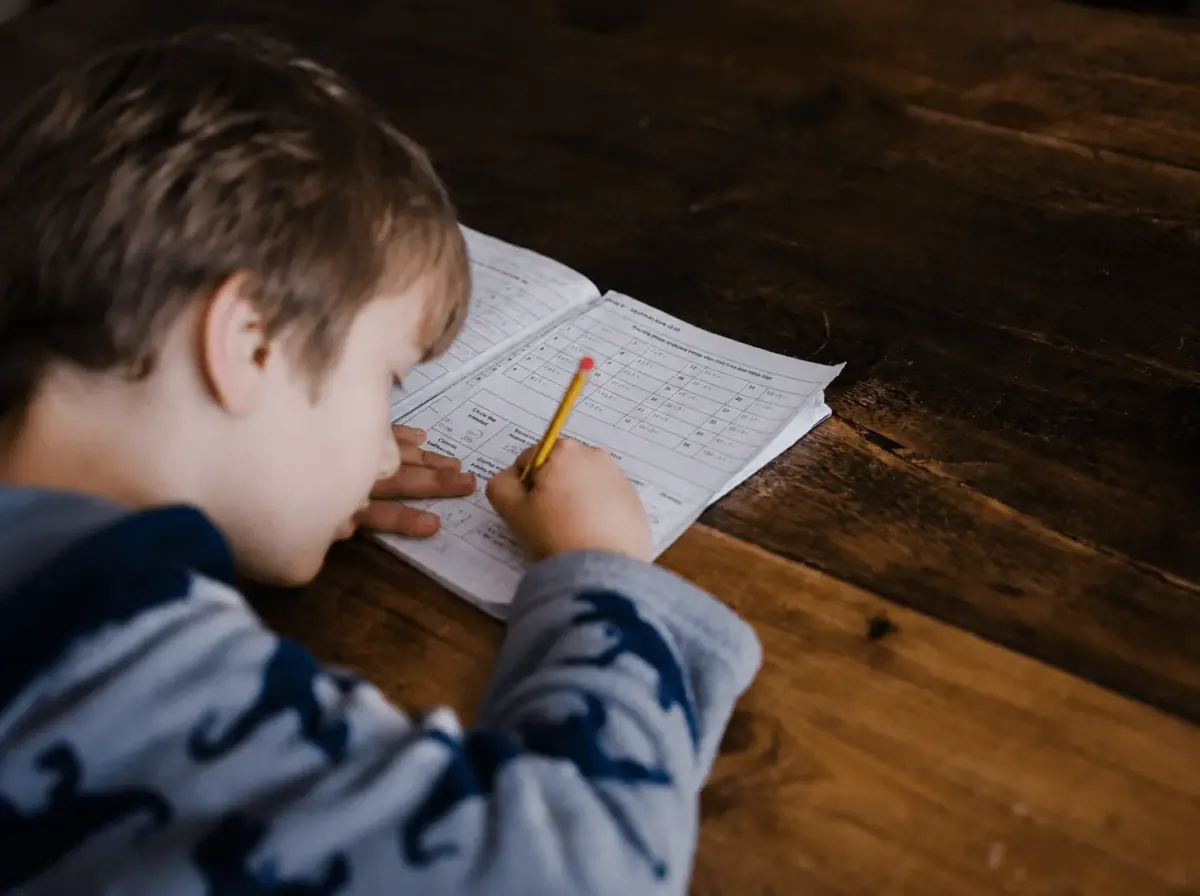
- 🤖 Students use AI to understand concepts, brainstorm ideas, and solve problems—not just get homework answers.
- 📚 Different AI tools shine in different areas, from studying and coding to writing and creative projects.
- 💡 The best way to use AI is as a learning partner that encourages curiosity and critical thinking.
Ask a teacher how students use AI, and you’ll probably hear one word: homework.
Ask students, and the answers get a lot more interesting.
Through a challenge in the Modak app, nearly 1,000 kids and teens shared the AI tools they use and what they actually use them for. Homework showed up a lot. So did coding projects, game design, essay feedback, career advice, image creation, and a surprising number of random questions.
Some students said AI helps them learn.
Others said it helps them create.
A few said they avoid it altogether.
Their responses reveal something many headlines miss: students aren’t all using AI the same way.
About this article: The ideas discussed in this article reflect comments submitted by participants in a Modak community challenge and are intended for educational and informational purposes only. References to AI tools describe hypothetical uses suggested by participants and should not be interpreted as descriptions of current product features, financial advice, or guarantees of financial outcomes. Responses are shared in participants’ own words and are published with their permission.
AI as a Tutor, Not a Shortcut
One of the biggest debates around AI in education is whether students are using it to learn or simply to get answers.
Many of the students in this challenge had a clear answer.
One participant explained:
“I use ChatGPT for school. I don’t cheat, I tell it to explain the process then I try and do it and tell it the answer that I got and if it’s wrong I try again.”
That idea showed up again and again throughout the responses.
Students weren’t describing AI as a way to avoid learning. They were describing it as a way to get unstuck.
Another student shared:
“I use chat GPT and Google AI to help explain my homework more thoroughly instead of just asking if the questions and getting the answers straight up.”
Several participants talked about using AI to check their thinking rather than replace it.
“I use AI on my homework to double check I have it right — not to cheat but I use it as a tool.”
Others saw AI as something closer to a personal tutor.
“I use ChatGPT to help me understand my homework when I don’t understand. It helps me learn when it explains the problem to me.”
That’s an important distinction.
Getting an answer might help with today’s assignment.
Understanding the process can help with the next ten.
For many students, the best AI homework helper isn’t the one that solves the problem. It’s the one that helps them understand it.
That instinct lines up with what researchers are finding at a national level: a Pew Research Center survey found that more than half of U.S. teens now use AI chatbots to help with homework, most often to search for information or work through a concept rather than to get a finished answer.

What AI Tools Do Students Actually Use?
ChatGPT was the most frequently mentioned AI tool in the challenge, but it wasn’t the only one.
Students also talked about Gemini, Claude, Copilot, Gauth, and several specialized tools for coding, design, and project creation.
One participant described using different tools for different tasks:
“I use a lot of different AI. I use ChatGPT for fun and business and school stuff, I use Gemini for making pictures or editing them sometimes, I use Grok for things related to research and social media.”
Another student shared:
“I use ChatGPT and Claude along with warp.dev and lovable to help me design and bring my projects to life.”
What stood out wasn’t just the variety of tools.
It was how intentional students were about using them.
Rather than relying on one AI for everything, many students seemed to understand that different tools are better at different tasks.
Some responses were refreshingly simple.
“I use Gemini and Google AI for school help and questions about my cats and other random questions.”
Homework and cats.
Honestly, that probably sums up modern AI use better than most research reports.
AI for Creativity and Writing
When adults talk about AI in schools, the conversation often centers on homework.
Students had a much broader perspective.
Many described using AI as a creative partner rather than an answer machine.
One response stood out immediately:
“I use ChatGPT as a ‘sparring partner’ for creative projects. Whether I’m stuck on a title for a story or need ideas for a science fair project, it helps me get past writer’s block by providing several options to choose from.”
“Sparring partner” might be one of the most interesting descriptions of AI in the entire challenge.
The goal isn’t to have AI do the work.
The goal is to have something to bounce ideas off when you’re stuck.
Another student shared:
“I use ChatGPT for reviewing my homework, telling me what’s wrong or right, and even as an essay reviewer.”
Others were using AI to create entirely new projects.
“I sometimes use chatGPT to help revise my code for games I make.”
And another participant said:
“I use Claude to help me make a game on my phone to let people play it and used ChatGPT to learn about MBX.”
These responses suggest that students aren’t just consuming technology.
Many are building with it.
Then there was perhaps the most relatable answer in the entire challenge:
“I use chatGPT to write fanfics.”
Short. Honest. No further explanation needed.
How Modak helps
- 🎯 Modak encourages curiosity through interactive challenges that inspire teens to explore new ideas and skills.
- 📱 The Modak app helps teens build financial literacy while learning to use technology responsibly.
- 🚀 Modak empowers teens to develop real-world confidence by combining hands-on money management with lifelong learning.
The Best AI Tools for Students, According to Kids
Based on the responses in this challenge, a few tools appeared consistently.
ChatGPT
ChatGPT’s dominance among students tracks with national data too: a December 2025 Pew Research Center report found ChatGPT is used by far more teens than any other chatbot, well ahead of Gemini and Meta AI.
Students used ChatGPT for: Homework help, essay feedback, studying, coding, brainstorming, creative writing, research.
Gemini
Students used Gemini for: School questions, quick answers, image creation, everyday curiosity.
Claude
Students mentioned Claude for: Building projects, game development, creative work.
Other Tools
Students also mentioned Copilot, Gauth, School AI, Canva AI, Grammarly, and several coding-focused tools.
What’s interesting isn’t which tool came first.
It’s that students are increasingly choosing tools based on what they’re trying to accomplish—a pattern the U.S. Department of Education’s own AI guidance also points to as key for using these tools responsibly in school settings.
The Most Unexpected Ways Students Use AI
Not every answer was about school.
In fact, some of the most memorable responses had nothing to do with homework at all.
One student wrote:
“I use copilot for mental health and with random questions, or Gemini when I have a question and just call/yell ‘Hey Google’.”
Note: While some students described using AI to discuss personal topics, AI tools are not substitutes for licensed mental health professionals or trusted adult guidance. The National Institute of Mental Health’s help resources are a good starting point for anyone who needs real support.
Another participant explained:
“I use ChatGPT and Snapchat AI for homework but also like future career tips and like things to do to get certain jobs and stuff.”
AI wasn’t just helping with assignments.
It was helping students think about the future.
Some students used it for hobbies.
Others used it for advice.
And one participant submitted what may be the greatest response in the entire challenge:
“I use AI for crazy evil scientist schemes because I am an evil wizard scientist.”
There was also this unforgettable answer:
“I use AI glasses to win chess games.”
Whether practical or ridiculous, these responses reveal how quickly AI is becoming part of everyday life.
Why Some Kids Are Saying No to AI
One of the biggest surprises from the challenge wasn’t how many students use AI.
It was how many had strong opinions about not using it.
Several participants raised environmental concerns.
One student wrote:
“Not many — AI is ruining our environment.”
Another said:
“I don’t use AI because it is bad for the environment and wastes fresh water.”
Others were concerned about what AI might replace.
“I think that instead of using AI for things we should use our imagination to work.”
And some students simply weren’t convinced by the technology itself.
“None, because I’ve never gotten a correct answer from AI.”
These responses are a reminder that students aren’t blindly adopting new technology.
Many are actively thinking about its benefits, limitations, and tradeoffs.
What Students Can Learn From AI Without Depending on It
One student used AI to understand math.
Another used it to build a game.
Someone used it to get career advice.
One student used it to write fanfiction.
Another said they avoid AI completely because they’re worried about the environment.
And one person apparently uses it for “crazy evil scientist schemes.”
If there’s one thing these responses make clear, it’s that there isn’t a single way students use AI.
For some, it’s a tutor.
For others, it’s a creative partner.
For others, it’s simply another tool for exploring ideas.
The technology may be the same.
What students choose to do with it is where things get interesting.
And while AI can be incredibly helpful, the strongest responses in this challenge all had one thing in common: curiosity.
The students who seemed to get the most value from AI weren’t asking it to think for them.
They were using it to learn, create, experiment, and ask better questions.
That’s a skill that will matter long after today’s AI tools are replaced by whatever comes next.