
Board games that teach kids money skills: why Monopoly still works
- 🧐 Board games teach key money skills.
- 🪄 Simpler games work better for younger kids.
- 💰 Games + apps = fun, practical financial learning.
If you’ve ever played Monopoly, you know it’s not just a game, it’s a crash course in money management, strategy, and sometimes, family feuds! But did you know that Monopoly can be a powerful tool to teach kids financial basics? More importantly, are there better alternatives for younger kids to learn money skills in a fun and engaging way?
In this guide, we’ll break down the financial lessons in Monopoly, answer common questions like “how much money does everybody get in Monopoly?” and explore the best Monopoly alternatives for kids who want to learn about money without getting overwhelmed. Stick around until the end for a modern way to teach financial literacy using Modak!
How to play Monopoly: A quick overview
Before we dive into Monopoly’s financial lessons, let’s quickly cover the basics game rules.
- Objective: The goal of Monopoly is to control the board by buying, trading, and managing properties while collecting rent from opponents, with success determined by a combination of strategy and chance.
- Players: 2 to 8 players.
- Setup: Players start with a fixed amount of Monopoly money and take turns rolling dice to move around the board.
- Earning Money: Players earn money by passing Go, collecting rent, or trading properties.
- Spending Money: Players spend money on properties, upgrades (houses and hotels), and taxes.
How much money do you start with in Monopoly?
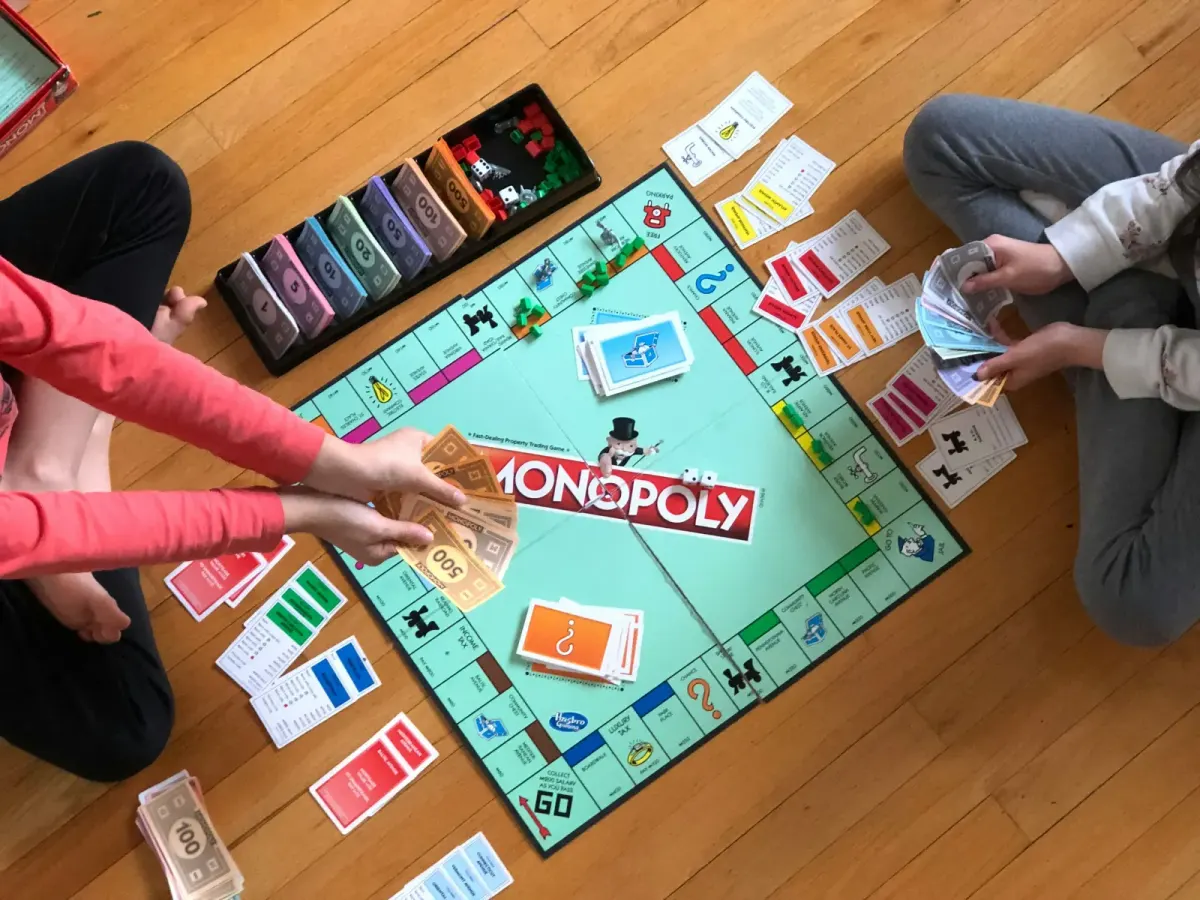
One of the first lessons in Monopoly is managing your in-game budget. Each player starts with:
- $1,500 in Monopoly money, distributed as follows:
- 2 x $500
- 2 x $100
- 2 x $50
- 6 x $20
- 5 x $10
- 5 x $5
- 5 x $1
Managing this amount effectively in Monopoly can impact your ability to last longer in the game and possibly increase your chances of winning. Players who overspend early may find themselves in a difficult position, while those who manage their money carefully have a better chance of staying competitive and potentially dominating in the later stages of the game.
Best Monopoly versions for teaching kids money basics
Monopoly has evolved over the years, with different versions catering to various age groups. Here are some of the best versions for teaching financial skills:
1. Monopoly junior
- Designed for kids ages 5+ with simpler rules.
- Uses smaller denominations of money.
- Faster gameplay to keep younger kids engaged.
2. Monopoly ultimate banking edition
- Featuring an electronic banking system, this version introduces kids to the concept of digital transactions.
- Teaches kids how digital transactions work.
- It’s a good introduction to modern financial literacy.
3. Monopoly deal (Card game)
-
A fast, portable card game that promotes strategic spending and investing, with a simplified take on financial concepts.
-
A quick and portable alternative.
-
Encourages strategic thinking about spending and investing.
How Modak helps
- 📝 Hands-on learning with real money and a kids’ debit card.
- 💡 Gamified rewards like MBX points and walking challenges.
- 👀 Parental oversight for safe money management.
Monopoly alternatives for kids
Although Monopoly is a popular choice for financial lessons, its complexity can be overwhelming for younger players. Here are some fun and engaging alternatives to help kids learn money skills:
1. The Game of life
- Teaches about salaries, debts, and life choices.
- Players experience different financial paths based on decisions.
2. Payday
- Focuses on monthly budgeting and unexpected expenses.
- Players learn about saving, paying bills, and handling money wisely.
3. Money bags
- Aimed at younger kids to teach basic money skills.
- Helps children recognize different coins and bills.
4. Cashflow for kids
- Created by Robert Kiyosaki (author of Rich Dad Poor Dad).
- Focuses on investing, assets, and passive income.
Teaching with Monopoly: Financial lessons for kids
Monopoly is an excellent tool for teaching financial literacy. Here are some money management concepts kids can learn:
- Budgeting: Players must manage their money wisely to avoid bankruptcy.
- Saving & Investing: Buying properties is like investing, early investments pay off later.
- Debt Management: Players must decide whether to mortgage properties for quick cash.
- Risk vs. Reward: Players learn how taking risks (buying expensive properties) can lead to greater rewards or financial trouble.

Common questions about money & board games
What board game teaches kids money?
Monopoly, Payday, and The Game of Life are some popular board games for teaching kids about money.
How to teach kids the concept of money?
- Use board games.
- Give them an allowance and let them manage their expenses.
- Use financial apps that teach kids basic financial concepts like Modak.
What board games help with math skills?
Games like Monopoly, Money Bags, and The Game of Life help kids improve counting, addition, and budgeting skills.
What is the #1 board game in the world?
Monopoly is one of the most well-known board games globally, alongside Chess and Scrabble.
A Modern alternative: Learning money skills with Modak
While board games are a great way to introduce kids to financial concepts, a real-world tool like Modak provides additional opportunities to apply these concepts in real life.
- Earn & Learn: Kids using Modak can earn MBX by completing financial challenges, walking 5,000 steps daily², and participating in tasks that promote healthy habits.
- MBX to Dollars: MBX points can be converted into real money, teaching kids the value of earning and saving¹.
- Practice Money Management: With Modak’s Visa® debit card, kids can practice money management, while parents track their transactions.
Why Modak?
- Safe and fun financial learning for kids of all ages.
- Encourages kids to save and manage their money.
- Gamified rewards keep learning interactive and motivating.
- Walk to earn feature: Kids can earn up to 70 MBX per week just by reaching their walking goals, making it a fun way to build good habits while earning pocket money.
If you want your child to learn about money in a practical and rewarding way join Modak today. Modak turns learning about money into a fun, hands-on experience they’ll actually enjoy.
Final thoughts
Monopoly and its alternatives are fantastic tools to introduce kids to money management, strategy, and smart financial habits. When paired with real-world applications such as Modak’s app and its MBX rewards, children not only learn but also practice financial responsibility.
So the next time you’re playing Monopoly, consider how you can help your child build financial confidence beyond the board—using tools designed to support learning through experience!